
Itinerary
7 Days in Morocco: Marrakech, the Atlas & Sahara
Medina, mountains, and a Merzouga desert night — how to do it in a week without living on a bus.
Overview
This itinerary carves a classic path through Morocco, blending the imperial city chaos with the serene vastness of the Sahara. We prioritize a deep dive into Marrakech before a well - paced desert crossing, making a necessary stop in Ouarzazate to break up the long drive. This means less time in Fez, but ensures you're not rushing through the desert, which is often the highlight for many. It's designed for those who want a taste of both vibrant urban life and dramatic natural landscapes without feeling constantly on the move.
Who it's for
This itinerary is ideal for first - time visitors to Morocco, adventurous couples, or friends who appreciate a mix of cultural immersion and natural beauty. It’s perfect if you enjoy bustling markets, unique accommodations, and aren't afraid of long but scenic car journeys. Skip this if you dislike extended car travel (Day 3 and 5 involve 6 - 7 hours of driving) or prefer to entirely avoid tourist - oriented desert camps.
Best time to go
The sweet spot for this route is spring (April - May) or fall (September - October). Temperatures are pleasant across the board, averaging 20 - 28°C. Spring brings blooming wildflowers to the Atlas, while fall offers clear desert skies. Avoid July and August when Marrakech can hit 40°C+ and the desert is scorching. Winter (Dec - Feb) is cool in the cities and frigid in the desert at night, though daytime can be sunny.
Budget
| Style | Per day | What it buys |
|---|---|---|
| Budget | €50 - 75/day | Hostel dorms or basic guesthouses, street food/local cafes, shared grand taxis or local buses for inter - city travel, budget desert camp. |
| Mid - range | €100 - 150/day | 3 - star riads or boutique hotels, combination of local restaurants and mid - range dining, private transfers for desert tour, comfortable desert camp. |
| Comfort | €200 - 300+/day | Luxury riads, fine dining experiences, private driver for the entire trip, luxury desert camp with amenities. |
What to pack
- Loose, lightweight clothing (linen shirts, long skirts/trousers) for hot weather and cultural respect.
- A light scarf or pashmina for women to cover shoulders/head when entering mosques or for sun protection.
- Closed - toe shoes (sturdy sandals or sneakers) for walking souks and uneven terrain; avoid flip - flops.
- Small daypack (20 - 30L) for daily excursions and the overnight desert trip.
- Portable power bank – outlets can be scarce in some desert camps.
- Basic first - aid kit, including anti - diarrhea medication and rehydration salts.
- Headlamp or small flashlight for navigating desert camps at night.
Day 1: Marrakech: Arrival & Djemaa el-Fna Immersion
Base: Marrakech
Morning. Arrive at Marrakech Menara Airport (RAK), grab a prepaid SIM card (€10 - 15 from Inwi/Orange/Maroc Telecom). Take a grand taxi (around 70 - 100 MAD, agree price beforehand) directly to your riad in the Medina. Settle in, then head out late morning to get your bearings around your immediate souk area.
Afternoon. Lunch near Bahia Palace (e.g., Le Jardin) then explore the palace itself (entry 70 MAD). Aim for late afternoon entry to avoid peak crowds and enjoy the shifting light. Afterwards, wander through the Jewish Quarter (Mellah) and its spice market, which is less bustling than the main souks.
Evening. Experience Djemaa el - Fna Square as it transforms at sunset. Grab a fresh orange juice, marvel at the storytellers and musicians, then choose a food stall (Stall 14 for harira and tangia, Stall 32 for grilled meats – check hygiene before committing). Dinner around 8 - 9 PM.
🛏 Sleep: Medina, specifically around Riad Laarous or Mouassine districts – central, authentic, and relatively easy to navigate from Djemaa el - Fna.
🚆 Transport: Airport taxi to riad. Walking day.
💡 Tip: Pre - book a trusted riad transfer from the airport if arriving late; navigating the medina's alleyways in the dark with luggage can be disorienting and stressful for first - timers.
Day 2: Marrakech: Gardens, Tombs & Souk Labyrinth
Base: Marrakech
Morning. Start early (~8:30 AM) with a visit to Jardin Majorelle (entry 100 MAD, book online ahead to skip the queue). Aim to be there right at opening to experience the calm before the tour groups descend. Allow 1.5 - 2 hours, then grab a petit taxi (insist on the meter) back towards the Medina.
Afternoon. After lunch in Gueliz (Marrakech's new town, for a change of pace or Western food craving), head back to the Medina to explore the Secret Garden (entry 80 MAD). Later, visit the Saadian Tombs (entry 70 MAD) and the Koutoubia Mosque gardens (exterior views only for non - Muslims).
Evening. Dinner in the vibrant Mouassine neighborhood – explore restaurants like Nomad or Café des Épices for a more upscale, atmospheric experience. Consider a traditional hammam (public bath) for a relaxing end to an active day; pre - book at a reputable riad/hotel spa.
🛏 Sleep: Medina – same riad to avoid packing/unpacking.
🚆 Transport: Walking and petit taxis within Marrakech.
💡 Tip: When taking a petit taxi in Marrakech, always hail passing ones and insist they use the meter. If they refuse, wait for the next; agreeing on a price beforehand often means overpaying, especially around tourist areas.
Day 3: High Atlas Crossing & Ait Benhaddou
Base: Ouarzazate
Morning. Early start (7:30 - 8:00 AM) for your desert tour departure. Most tours pick up from your riad or a nearby designated spot. The morning drive takes you over the Tizi n'Tichka pass in the High Atlas Mountains (approx. 4 - hour drive to Ait Benhaddou with photo stops). Enjoy varied landscapes and Berber villages.
Afternoon. Arrive at Ait Benhaddou (UNESCO Kasbah) around lunchtime. Your tour will likely include lunch at a local restaurant. Spend 2 - 3 hours exploring the ancient kasbah, known for its appearance in many films. Wear sturdy shoes as paths are uneven. Afterwards, it's a short 30 - minute drive to Ouarzazate.
Evening. Check into your hotel in Ouarzazate. This city is a film hub. Dinner at your hotel or a local restaurant near the central Place al - Mouwahidine. Options are generally simpler than Marrakech, focusing on tagines and grilled meats. Early night after a long travel day.
🛏 Sleep: Ouarzazate – a comfortable hotel outside the city center near the film studios for convenience and quieter surroundings.
🚆 Transport: Private car/minibus for desert tour (approx. 6 - 7 hours driving including stops, Marrakech to Ouarzazate).
💡 Tip: Pack motion sickness medication for the winding roads through the Atlas Mountains, especially if prone to car sickness. The Tizi n'Tichka Pass, while stunning, has numerous curves.
Day 4: Valleys, Gorges & Desert Gateways
Base: Merzouga Area (Erg Chebbi Dunes)
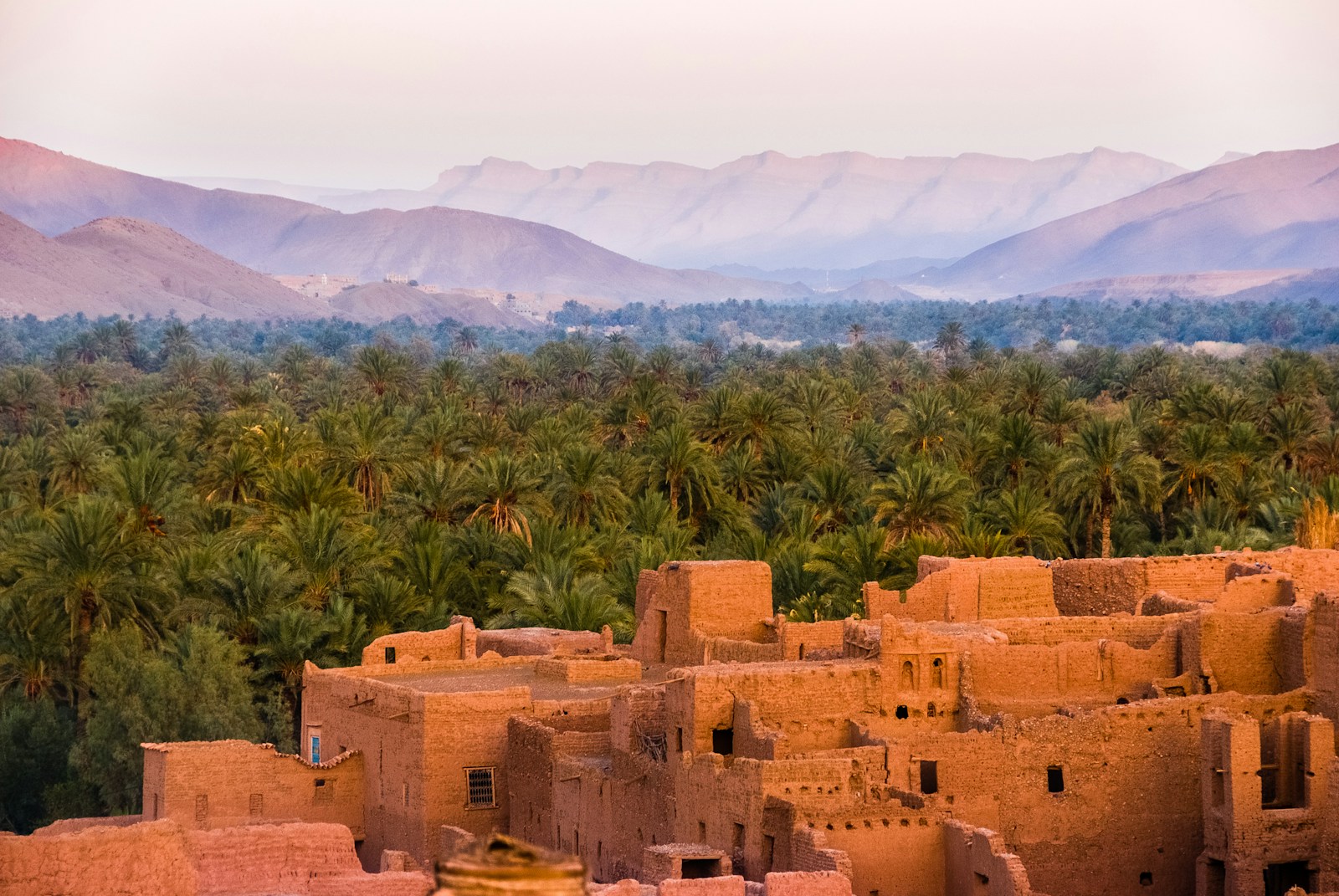
Morning. Depart Ouarzazate after breakfast (around 8:00 AM). The drive will take you through the Skoura Oasis with its palm groves and kasbahs, then through the 'Valley of a Thousand Kasbahs' and the Dades Valley. Stop for photos and short walks in the Dades Gorges (approx. 3 - 4 hours drive to Tinghir).
Afternoon. Continue to the dramatically narrow Todra Gorge for a walk along the riverbed (approx. 1 hour drive from Dades). After lunch near the gorge, the landscape flattens as you head towards Erfoud and Rissani, the last towns before the dunes. Expect another 3 - 4 hours drive to Merzouga.
Evening. Arrive at a guesthouse near Merzouga's Erg Chebbi dunes in the late afternoon. Here you'll meet your camel caravan. Enjoy a sunset camel trek (approx. 1 - 1.5 hours) into the desert to your camp. Dinner will be at the desert camp under the stars, followed by Berber music around the campfire.
🛏 Sleep: Desert camp in Erg Chebbi dunes – choose a camp that offers private tents with beds and bathroom facilities for comfort.
🚆 Transport: Private car/minibus for desert tour (approx. 8 - 9 hours driving including stops, Ouarzazate to Merzouga). Camel trek to desert camp.
💡 Tip: Even in the desert, nights can get surprisingly cool, especially outside of peak summer. Pack a warm layer (fleece or light jacket) for stargazing after sunset at the desert camp.
Day 5: Desert Sunrise & Long Road Back
Base: Fez
Morning. Wake before dawn to climb a nearby dune and witness the incredible desert sunrise over Erg Chebbi. After breakfast at the camp, camel trek back to your guesthouse in Merzouga. Have a quick shower, then meet your driver for the long journey north.
Afternoon. The drive from Merzouga to Fez is long (approx. 7 - 8 hours). You'll traverse varied landscapes, from the ziz valley to high arid plains and cedar forests around Ifrane. Lunch will be a brief stop at a simple roadside restaurant in a town like Midelt.
Evening. Arrive in Fez in the late afternoon/early evening. Check into your riad in the Medina. For dinner, choose a welcoming restaurant near your accommodation; many riads offer excellent home - cooked meals. Take it easy after the extensive travel day.
🛏 Sleep: Fez Medina – choose a riad in the Batha or Ziat areas for easier access with luggage and slightly wider thoroughfares.
🚆 Transport: Private car/minibus (approximately 7 - 8 hours, Merzouga to Fez).
💡 Tip: Break up the long drive from Merzouga to Fez with a stop in Ifrane, often called 'Little Switzerland' due to its European alpine architecture. It's a surreal contrast to the desert and offers a chance to stretch your legs in a different climate.
Day 6: Fez: Medieval Medina Labyrinth
Base: Fez
Morning. Hire an official local guide for the morning (around 200 - 300 MAD for half - day, essential for unlocking Fez). Start at Bab Bou Jeloud (the Blue Gate), then dive into the Chaouwara Tannery (arrive before noon for active work), Al - Attarine Madrasa, and Nejjarine Museum of Wooden Arts and Crafts.
Afternoon. Lunch at a traditional Fassi restaurant within the Medina (e.g., Ruined Garden). Spend the afternoon exploring more of the artisan souks – coppersmiths, dyers, weavers – and visit Batha Museum (entry 20 MAD) for a dose of Moroccan art and artifacts. The labyrinthine alleyways are the real attraction.
Evening. Dinner at a riad or restaurant offering rooftop views of the Medina, such as Dar Tajine or Clock Cafe. Enjoy the atmospheric call to prayer echoing across the rooftops. Consider a traditional music performance if available; ask your riad for recommendations.
🛏 Sleep: Fez Medina – same riad.
🚆 Transport: Walking day, potentially a petit taxi to/from a gate if your riad is farther in.
💡 Tip: Fez Medina is notoriously complex. Hire a licensed guide for at least half a day to navigate efficiently, avoid getting lost, and gain historical context. Guides can be arranged through your riad or found at major gates.
Day 7: Fez: Departure
Base: Fez
Morning. Depending on your flight schedule, enjoy a final Moroccan breakfast at your riad. If time permits, do some last - minute souvenir shopping in the souks for items you may have missed or want more of. Consider visiting the Bab Bou Jeloud area again for a coffee and people - watching.
Afternoon. Arrange for a grand taxi or private transfer from your riad to Fes–Saïs Airport (FEZ). The drive typically takes 30 - 45 minutes. Leave ample time, at least 3 hours before your flight, allowing for potential traffic and airport procedures.
Evening. Depart from Fes–Saïs Airport (FEZ).
🛏 Sleep: N/A
🚆 Transport: Grand taxi or private transfer to Fes–Saïs Airport (FEZ).
💡 Tip: Confirm and pre - book your airport transfer from your Fez riad the day before. Many riads are not car accessible, and a porter may be needed to carry luggage to the nearest pick - up point, which your riad can arrange.
Travel tips
- When offered mint tea by carpet sellers, it’s a gesture of hospitality, not an obligation to buy. Enjoy the tea and conversation, but be firm if you're not interested in purchasing.
- Download an offline map app (like Maps.me or Google Maps offline) for navigating the Medinas of Marrakech and Fez. GPS works remarkably well even in the narrow alleyways.
- Carry small denominations of Moroccan Dirham (MAD) for small purchases and tips. Many street vendors and smaller shops cannot break large bills easily.
- In the desert, be prepared for basic conditions even in 'luxury' camps. Showers might be cold, and electricity limited to certain hours. Manage expectations.
- Always ask for permission before taking photos of people, especially women. A simple 'photo, s'il vous plaît?' or 'mumkin soura?' is polite. Expect some people to ask for a small fee.
- If traveling solo or as women, consider dressing modestly (shoulders and knees covered) to avoid unwanted attention, particularly in rural areas and traditional parts of the cities.
- Bargaining is expected in the souks, but do so respectfully and with a smile. A good starting point is to offer 30 - 50% of the initial asking price and negotiate towards a reasonable middle ground.
- The 'official' guides at sites can sometimes be pushy. If you prefer to explore independently, a polite but firm 'La, shukran' (No, thank you) usually suffices. For the Fez Medina, however, a pre - booked licensed guide is highly recommended.
FAQs
How safe is Morocco for tourists?
Morocco is generally very safe for tourists. Petty crime like pickpocketing can occur in busy areas, so remain vigilant, especially in souks and Djemaa el - Fna. Major tourist areas are well - policed. Solo female travelers should take usual precautions by dressing modestly and avoiding walking alone late at night in unlit alleyways.Do I need a visa for Morocco?
Citizens from the US, Canada, UK, Australia, New Zealand, most of Europe, and many other countries do not need a visa for stays up to 90 days. Always check the specific requirements for your nationality with the Moroccan embassy or consulate in your country before travel.What currency is used in Morocco, and can I use credit cards?
The official currency is the Moroccan Dirham (MAD). You cannot legally import or export Dirhams. Major credit cards (Visa, Mastercard) are accepted in larger hotels, upscale restaurants, and shops, but cash is essential for souks, street food, small purchases, and tipping. ATMs are widely available in cities.Is tap water safe to drink in Morocco?
It's generally not recommended to drink tap water in Morocco, especially for visitors. Stick to bottled water, which is readily available and inexpensive. Use bottled water even for brushing teeth to be safe. Many riads offer filtered water for guests.What is the best way to get around between cities?
For this itinerary, a private desert tour with a driver is usually included for the Marrakech - Ouarzazate - Merzouga - Fez route, which is the most efficient. Otherwise, ONCF trains connect major cities like Marrakech and Fez (though not included in this route), and CTM or Supratours buses offer reliable inter - city travel for budget travelers.What should I wear for visiting mosques and religious sites?
Non - Muslims are generally not permitted inside mosques in Morocco, with a few exceptions like the Hassan II Mosque in Casablanca. For respectful entry to madrasas and kasbahs, women should cover their shoulders and knees. Men should wear long trousers. A scarf is useful for women to have on hand.How much should I budget for tipping?
Tipping is customary in Morocco. For café/restaurant staff, 10% is standard. For tour guides, 50 - 100 MAD per person per day is appropriate. Porters expect 5 - 10 MAD per bag. Taxi drivers don't always expect tips but appreciate rounded - up fares. For gas station attendants or toilet attendants, 2 - 5 MAD is fine.Can I buy alcohol in Morocco?
Yes, alcohol is available but less common than in Western countries. Larger hotels, some upscale restaurants, and specialized shops (


