
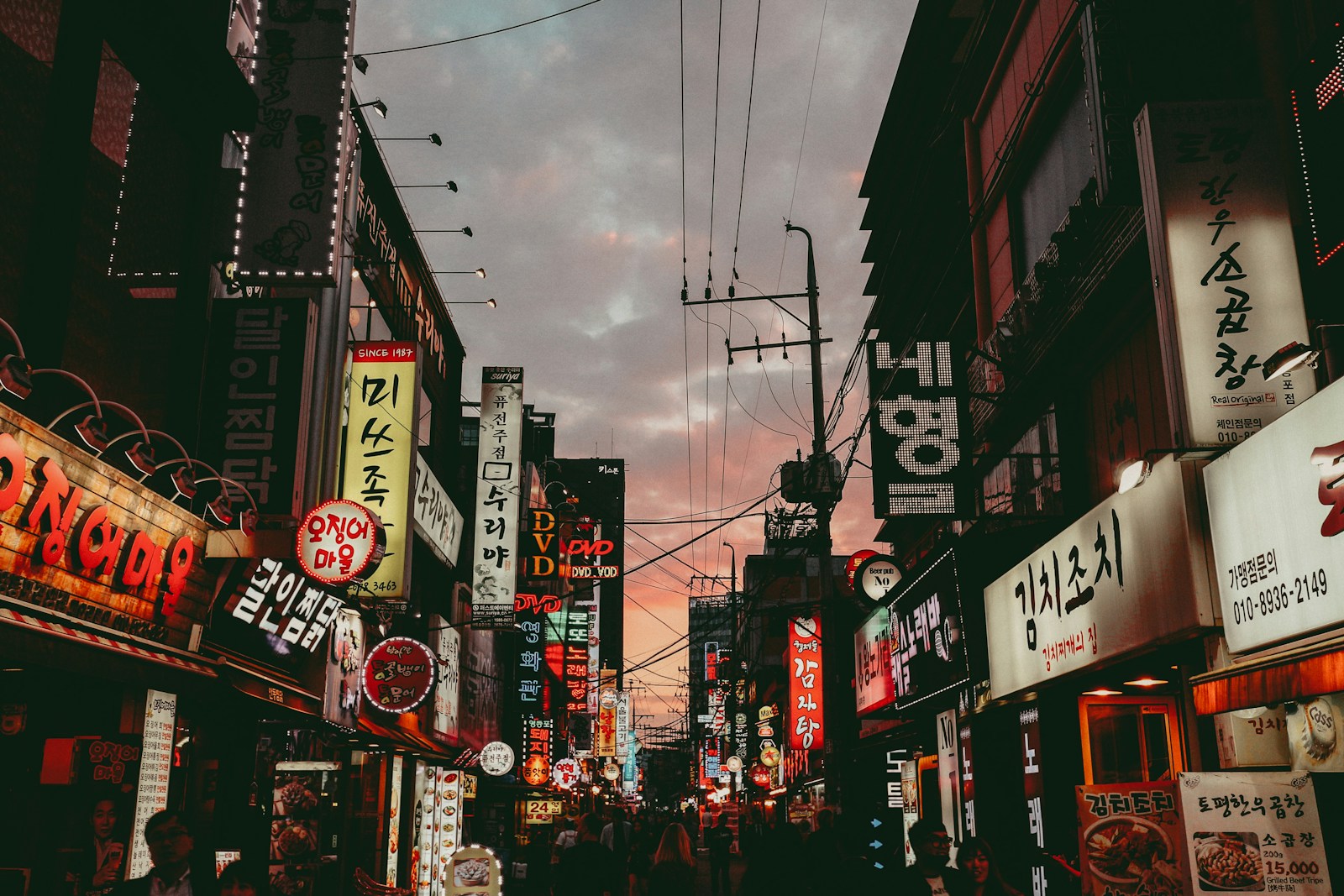
Travel Costs
How Much Does a Trip to South Korea Cost? (2026 Breakdown)
KTX fares, guesthouse vs hotel math, and how cheap Korean street food really is.
Overview
Traveling to South Korea in 2026 means navigating a budget heavily influenced by KTX train tickets, which can easily add $100-$150 per person for a return trip between major cities like Seoul and Busan. Accommodation in popular areas like Myeongdong or Gangnam also dominates the budget, often exceeding $100/night even for mid - range options. Conversely, incredibly affordable and high - quality street food and excellent public transport in cities help keep daily costs down, making it cheaper than places like Japan or Western Europe, but still pricier than Southeast Asia. Don't underestimate the cost of popular K - Pop concerts or themed cafes if those are on your itinerary; they can swing your daily spend by $50-$100 unexpectedly.
Currency & payments
The local currency in South Korea is the Won (KRW). As of early 2026, the exchange rate hovers around 1,350 KRW to 1 USD, or approximately 1,470 KRW to 1 EUR. South Korea is overwhelmingly a card - friendly society; credit and debit cards (Visa, Mastercard) are accepted almost everywhere, from street food stalls to major department stores. You'll rarely need cash, but having around 50,000 KRW ($37 USD) for very small vendors or rural areas is wise. ATMs are widely available, especially in major cities, but check with your bank for foreign transaction fees. Tipping is generally not expected or practiced in South Korea, even in restaurants or taxis, so don't budget for it.
When to book
Booking international flights to Incheon (ICN) for South Korea is typically cheapest 3 - 5 months out, with peak summer (July - August) and autumn (October) seeing price hikes. Airlines like Korean Air and Asiana generally release their best fares then. Hotels, particularly in Seoul's popular districts like Hongdae or Insadong, can spike significantly during cherry blossom season (late March - early April) and major festivals like Chuseok (autumn harvest festival), so book those 6+ months in advance. For KTX tickets, booking 1 month ahead on Korail’s website is sufficient for most routes, but holiday periods require booking as soon as tickets are released (often 2 months prior) to secure your spot.
Daily & trip budget
| Style | Per day | Per trip | What it buys |
|---|---|---|---|
| Budget | $65 - 90/day | $650 - 900 for 10 days (excl. flights) | Hostel dorms, street food/convenience store meals, public transport, free attractions or cheap entry fees. |
| Mid - range | $120 - 180/day | $1,200 - 1,800 for 10 days (excl. flights) | 3 - star hotel/guesthouse, a mix of street food and sit - down restaurants, KTX trains for inter - city travel, a few paid attractions. |
| Comfort | $250 - 400+/day | $2,500 - 4,000+ for 10 days (excl. flights) | 4 - 5 star hotels, nice restaurants, private transfers or taxis, guided tours, frequent KTX first - class, extensive shopping. |
Cost by category
| Category | Budget | Mid - range | Comfort | Notes |
|---|---|---|---|---|
| Flights (from major hub, e.g., LAX/LHR) | $700 - 1100 (economy) | $900 - 1500 (economy) | $1800 - 3500+ (premium economy/business) | Prices for round - trip to Incheon (ICN) via Skyscanner or Google Flights. Expect higher from Europe. |
| Accommodation (per night) | $25 - 45/night | $80 - 150/night | $200 - 400+/night | Budget: Hostels like Hostelworld's Zzzip Guest House (Hongdae). Mid: 3 - star like Hotel Skypark (Myeongdong) on Agoda. Comfort: 5 - star like Lotte Hotel Seoul on Booking.com. |
| Food & drink (per day) | $20 - 40/day | $50 - 80/day | $100 - 200+/day | Budget: Street food (Tteokbokki for ₩5,000), convenience store meals. Mid: Local restaurants (bibimbap ₩10,000-₩15,000). Comfort: Upscale dining, frequent cafe visits. |
| Local transport (per day) | $5 - 10/day | $10 - 20/day | $25 - 50+/day | T - Money card for subway/bus (₩1,250 per ride). Taxis (Kakao T) cost ₩4,800 base fare. |
| Activities & entrance fees (per day) | $5 - 15/day | $20 - 40/day | $50 - 100+/day | Budget: Free parks, basic temple entries (Gyeongbokgung ₩3,000). Mid: DMZ tours ($50 - 80), Namsan Tower (₩15,000). Comfort: Theme parks (Everland ₩56,000), K - Pop concerts ($80 - 150). |
| Inter - city KTX (total for trip) | $60 - 80 | $100 - 150 | $180 - 250 | One - way KTX Seoul - Busan is around ₩59,800 ($45). Budget assumes one return trip. Comfort allows for more frequent/first - class KTX. |
| ESIM/SIM card (10 days) | $20 - 30 | $20 - 30 | $20 - 30 | Korea Telecom (KT) or SK Telecom eSIM/SIM with 10GB data for 10 days, available on Klook or arrival. |
| Shopping & souvenirs | $0 - 30 | $50 - 150 | $200 - 500+ | Budget: Minimal gifts. Mid: K - beauty, small crafts. Comfort: High - end fashion, luxury goods in Myeongdong/Gangnam. |
A day in the life (sample spend)
Budget day. Budget Traveler Day in Seoul: Start with a convenience store breakfast (₩3,000/$2.20). Take the subway to Gyeongbokgung Palace (₩3,000/$2.20 entry) and explore the free Bukchon Hanok Village. Lunch is street food from Gwangjang Market (bibimbap ₩8,000/$5.90, tteokbokki ₩5,000/$3.70). Spend the afternoon at Changdeokgung Palace (₩3,000/$2.20 entry) and its Secret Garden (₩5,000/$3.70). Dinner is a cheap Korean BBQ set from a local joint in Sinchon (₩15,000/$11). Subway fares for the day (3 rides) ₩3,750/$2.80. Total: ₩41,750 / $30.70.
Mid - range day. Mid - range Traveler Day in Seoul: Breakfast at a local cafe (₩8,000/$5.90). Take the subway to Gangnam, visit Starfield Library (free). Lunch at a casual sit - down restaurant, perhaps a traditional Korean set meal (hanjeongsik) in Insadong (₩20,000/$14.80). Afternoon includes a visit to N Seoul Tower (cable car + observatory ₩19,000/$14) and a stroll through Namsan Park. Dinner is a popular Samgyeopsal (pork belly) restaurant (₩25,000/$18.50 per person). A few rounds of drinks at a pub in Hongdae (₩20,000/$14.80). Subway fares (4 rides) ₩5,000/$3.70. Total: ₩97,000 / $71.70.
Comfort day. Comfort Traveler Day in Seoul: Hotel breakfast buffet (₩40,000/$29.60). Private taxi transfer to Bukhansan National Park for a morning hike (₩20,000/$14.80 one - way). Lunch at a high - end Korean restaurant (e.g., Michelin - starred Bibigo) (₩50,000/$37). Afternoon shopping in Apgujeong Galleria Department Store and a visit to a high - end K - beauty spa (e.g., Sulwhasoo Flagship Store) for a treatment (₩150,000/$111). Evening cultural performance (e.g., Nanta show) (₩60,000/$44.40). Dinner at a fine dining restaurant with wine pairing (₩100,000/$74). Taxi transfers throughout the day (multiple trips) ₩40,000/$29.60. Total: ₩420,000 / $310.40.
Money savers
- Utilize the T - Money card for all public transport; it offers slight discounts on fares and eliminates the need for single - use tickets. Purchase it at any convenience store (GS25, CU) for ₩2,500 and load it up.
- Embrace street food and convenience store meals. Gimbap (seaweed rice rolls) from CU costs around ₩3,000 ($2.20) and is a perfectly acceptable lunch. Carry a reusable water bottle; water fountains are common, and refills save you ₩1,000-₩2,000 per bottle.
- Walk extensively, especially in neighborhoods like Insadong, Hongdae, or Bukchon Hanok Village. Not only is it free, but it's often the best way to discover hidden alleys and local shops. Use Naver Maps (rather than Google Maps) for walking directions.
- Consider an overnight train for longer distances, like Seoul to Busan, if available for your route (though less common than KTX). This can save on one night's accommodation cost, though KTX is generally faster and more comfortable.
- Look for 'lunch set' deals (점심 특선) at sit - down restaurants, especially in business districts. These offer significantly reduced prices for multi - course meals compared to dinner menus, often for under ₩15,000 ($11).
- If you're visiting multiple palaces or museums in Seoul, check if a combination ticket exists. For instance, the Royal Palace Pass covers Gyeongbokgung, Changdeokgung, Changgyeonggung, Deoksugung, and Jongmyo Shrine for ₩10,000 ($7.40), a substantial saving.
- Skip the DMZ tour if budget is tight. While historically significant, basic DMZ tours often cost $50 - 80 USD per person. Consider instead a visit to the War Memorial of Korea in Seoul (free entry) for a comprehensive historical overview.
- Buy K - pop merchandise or beauty products from official stores or reputable large retailers rather than small tourist traps. Prices are often fixed, and you're guaranteed authenticity. Shop at Olive Young or LOHB's for K - beauty deals, especially during sales.
Spending tips
- Get a T - Money Card Immediately: Purchase a T - Money card at any convenience store (7 - Eleven, GS25, CU) or subway station for ₩2,500 ($1.85). Load it with ₩30,000-₩50,000 ($22 - 37) for a 10 - day trip. It works on subways, buses, and even some taxis and convenience stores, simplifying transactions and offering minor fare discounts.
- Prioritize Public Transport: Seoul's subway system is efficient, extensive, and cheap (standard fare ₩1,250/$0.90 with T - Money). Use it for nearly all urban travel. For inter - city, the KTX train is fast and comfortable; book via Korail's website or app 1 - 2 months in advance for popular routes like Seoul - Busan.
- Utilize Naver Maps/Kakao Maps: Google Maps is notoriously unreliable for public transport directions in South Korea. Download and use Naver Maps or Kakao Maps for accurate subway, bus, and walking directions. They are indispensable for navigating.
- Eat at Local Restaurants for Lunch Sets: Many Korean restaurants offer 'lunch specials' (점심 특선) on weekdays, providing excellent value for money. A substantial meal that might cost ₩25,000 ($18.50) at dinner could be ₩12,000-₩15,000 ($9 - 11) at lunch.
- Take Advantage of Free Attractions: Many temples, parks (like Namsan Park), and even some museums (e.g., War Memorial of Korea, National Folk Museum) offer free entry. The changing of the guard ceremony at Gyeongbokgung Palace is also free and popular.
- Consider a Korea Rail Pass: If you plan on multiple long - distance KTX trips (e.g., Seoul - Busan return and another city), a Korea Rail Pass might be cheaper than individual tickets. A 5 - day flexible pass for a foreign traveler costs around ₩200,000 ($148).
- Use a Travel Credit Card with No Foreign Transaction Fees: With South Korea being heavily card - based, a credit card like Chase Sapphire Preferred or Capital One Venture X, which waives foreign transaction fees, will save you 2 - 3% on every purchase. Always pay in KRW if offered the choice.
- Look for Tourist Discount Coupons: Check the Korea Tourism Organization (KTO) website or visit their information centers in major cities for free tourist maps and discount coupons for attractions, museums, and sometimes even restaurants.
- Book Accommodation Strategically: Staying slightly outside prime tourist areas like Myeongdong, in neighborhoods like Hongdae or Sinchon, can save you 15 - 30% on accommodation without sacrificing accessibility due to the excellent subway system.
- Don't Over - Tip: Tipping is not customary in South Korea. Attempting to tip can sometimes cause confusion or even be politely refused. Save your money.
FAQs
How much does a 10-day trip to South Korea cost?
A 10 - day trip to South Korea, excluding international flights, typically costs between $650-$900 for a budget traveler, $1,200-$1,800 for a mid - range traveler, and $2,500-$4,000+ for a comfort traveler. This averages out to $65 - 400+ per person per day.Is South Korea expensive for tourists?
South Korea is moderately expensive for tourists, often compared to Western European countries or Japan, but generally more affordable than Scandinavia or Switzerland. Accommodation and high - speed rail (KTX) are the primary cost drivers, while food, local transport, and many cultural activities are relatively inexpensive.How much cash should I carry in South Korea?
You should carry approximately ₩50,000 to ₩100,000 ($37-$74 USD) in cash for incidentals or very small vendors. South Korea is extremely card - friendly, and most transactions, even small ones, can be done with a credit or debit card. ATMs are widely available if you need more cash.Is the Korea Rail Pass worth it?
The Korea Rail Pass (Korail Pass) is worth it if you plan to take at least two long - distance KTX return trips, such as Seoul to Busan and back, plus another city. A 3 - day flexible pass costs around ₩138,000 ($102 USD), while a round trip Seoul - Busan alone is about ₩119,600 ($88 USD). Calculate your intended KTX routes to see if it saves you money.How much is food per day in Seoul?
Food costs in Seoul can range from $20 - 40 per day for a budget traveler relying on street food and convenience stores, to $50 - 80 per day for mid - range dining, and $100 - 200+ per day for comfort travelers enjoying upscale restaurants. A typical sit - down meal at a local eatery costs around ₩10,000-₩15,000 ($7.40-$11).Can I use Google Maps in South Korea?
While Google Maps works for general navigation, it is often inaccurate for public transport and walking directions in South Korea due to data restrictions. It's highly recommended to download and use local apps like Naver Maps or Kakao Maps for reliable directions, especially for buses and subways.How much is a SIM card for 10 days in South Korea?
A 10 - day eSIM or physical SIM card with approximately 10GB of data from providers like Korea Telecom (KT) or SK Telecom typically costs between $20 - 30 USD (₩27,000-₩40,000). You can purchase these easily online through Klook or upon arrival at Incheon Airport.What is the best way to get around in South Korea?
The best way to get around major cities in South Korea is by using the extensive and efficient subway and bus systems with a T - Money card. For inter - city travel, the KTX high - speed train is the fastest and most comfortable option, with tickets costing around ₩59,800 ($45 USD) one - way from Seoul to Busan.Is tipping customary in South Korea?
No, tipping is generally not customary or expected in South Korea. Whether in restaurants, cafes, or taxis, service charges are usually included in prices, or service staff are paid a living wage. Attempting to tip can sometimes cause confusion.What's a reasonable budget for shopping in South Korea?
A reasonable budget for shopping in South Korea varies widely, but for a 10 - day trip, a budget traveler might spend $0 - 30 on small souvenirs. A mid - range traveler might allocate $50 - 150 for K - beauty products or some clothing. Comfort travelers could easily spend $200 - 500+ on luxury items or extensive shopping in areas like Myeongdong or Gangnam.


