
Itinerary
10 Days in Morocco: Marrakech, Sahara & Fes
Medina days, a Merzouga desert night, and the Atlas crossing between them.
Overview
This 10 - day Morocco itinerary dives deep into the country's rich culture and breathtaking natural beauty, prioritizing immersive experiences over rushing between every major city. We're skipping the intense pace of trying to hit the coast to make sure you have ample time in the vibrant souks of Marrakech and a truly unforgettable Sahara Desert overnight. Expect early starts for seamless transitions and a focus on local interactions.
Who it's for
This itinerary suits culture enthusiasts, couples, and adventurous families with older teens who are comfortable with long drives, bustling markets, and varying accommodation styles, including a night in a desert camp. Skip this if you prefer a self - drive trip, as navigating Morocco's roads can be challenging, or if you dislike group tours for the desert portion.
Best time to go
The best time to visit Morocco for this specific route is spring (April - May) or autumn (September - October). Temperatures are pleasant for city exploration and desert nights aren't brutally cold. Avoid summer (June - August) when Marrakech and the desert can exceed 40°C (104°F), and winter (November - March) when Atlas Mountain passes can close due to snow, and desert nights drop below freezing. The Fes Festival of World Sacred Music in June is an exception worth planning around if you don't mind the heat.
Budget
| Style | Per day | What it buys |
|---|---|---|
| Budget | €50 - 75/day | Hostel dorms or basic guesthouses, street food, local transport, shared desert camp. |
| Mid - range | €100 - 150/day | 3 - star riads, a mix of local restaurants and some tourist - focused ones, private transfers where possible, upgraded desert camp. |
| Comfort | €180 - 250+/day | Boutique riads, upscale restaurants, private driver throughout, luxury desert camp with private facilities. |
What to pack
- Lightweight, modest clothing (long trousers/skirts, shoulder - covering tops) for cultural respect and sun protection
- Comfortable, sturdy walking sandals or shoes suitable for uneven medina streets and rocky desert terrain
- A light scarf or pashmina for women (useful for mosque visits, sun, dust, and warmth)
- A compact daypack for daily excursions and the overnight desert trip
- Sunscreen, sunglasses, and a wide - brimmed hat for relentless Moroccan sun
Day 1: Casablanca: Arrival & Hassan II Mosque
Base: Casablanca
Morning. Arrive at Mohammed V International Airport (CMN), clear customs, and take a Grand Taxi (fixed price of 300 Dh) or train (50 Dh) to your hotel. Drop luggage and head directly to the Hassan II Mosque. Aim for an English guided tour, typically starting hourly from 9 AM (check official website for exact times); non - Muslims can only enter with a tour.
Afternoon. Enjoy a seafood lunch near the Corniche, then take a stroll along the Atlantic coastline. Avoid swimming at the public beaches. Consider a visit to the Habous Quarter (New Medina) for a calmer shopping experience compared to the frenetic pace of cities like Marrakech later in the trip.
Evening. Dinner in the Maârif district, known for its modern vibe and a good selection of restaurants. Try a traditional tagine while people - watching. Stick to bottled water.
🛏 Sleep: Central Casablanca, near Place des Nations Unies, for easy access to the train station and major sights.
🚆 Transport: Train from CMN Airport to Casa Port, then short taxi to hotel. Rest of the day local taxis/walking. No transport required for tomorrow, you'll be on an early train to Fes.
💡 Tip: Pre - book your train ticket from Casa Port to Fes for Day 2 upon arrival to ensure your preferred departure time, especially if traveling during peak season.
Day 2: Fes: Ancient Medina & Artisan Crafts
Base: Fes
Morning. Board an early train from Casa Voyageurs to Fes (approx. 3.5 - 4 hours, 100 - 140 Dh). Check into your riad in the Fes el - Bali medina. Immediately hire an official local guide (arranged by your riad or via the Fes tourism office) for a half - day tour of the Chouara Tannery – aim for morning light for the best photo opportunities and less intense smells.
Afternoon. Continue exploring Fes el - Bali with your guide, focusing on the Attarine Madrasa, Al - Attarine Souk, and the Bab Bou Jeloud gate. Learn about the ancient university of Al - Karaouine from the outside (non - Muslims cannot enter). Have lunch at a traditional restaurant with a medina view.
Evening. Dinner in the medina, perhaps at a restaurant with live local music, trying a Fassi specialty like Rfissa. Retire early after a long day of travel and walking.
🛏 Sleep: Fes el - Bali (the old medina) in a traditional riad for an authentic experience, despite pedestrian - only access.
🚆 Transport: Morning train: Casablanca Casa Voyageurs to Fes Ville. In Fes, it's a walking day, no internal transport needed. You'll switch to private transport tomorrow.
💡 Tip: Wear sturdy, closed - toe shoes in Fes; the medina's cobblestones and uneven terrain are challenging, especially around the tanneries.
Day 3: Fes: Pottery & Mellah, then travel to Midelt
Base: Midelt
Morning. Visit a pottery cooperative just outside the medina walls to see traditional Fassi ceramics being made and perhaps try your hand at shaping clay. Afterward, explore the Jewish Quarter (Mellah) and its synagogue, noting the distinct architectural style with balconies.
Afternoon. Have a quick lunch in the Ville Nouvelle (New City) for a change of pace. Then, begin your journey by private transfer towards the Sahara, with a stop in Ifrane, nicknamed
Evening. Arrive in Midelt in the late afternoon. Enjoy a hearty dinner at your accommodation, which will likely be a simple guesthouse or hotel, as Midelt is a functional stopover town. Relax and prepare for the next day's desert adventure.
🛏 Sleep: Basic hotel or guesthouse in Midelt. It's a convenient, if not particularly charming, overnight stop on the long drive.
🚆 Transport: Full day private transfer from Fes to Midelt (approx. 4 - 5 hours driving plus stops). Pre - book through your riad or a reputable local agency.
💡 Tip: Confirm your private transfer includes stops at scenic points like Ifrane and the Cedar Forest, not just a direct drive, to break up the journey.
Day 4: Midelt to Merzouga: Ziz Valley & Desert Camp
Base: Merzouga (Erg Chebbi)
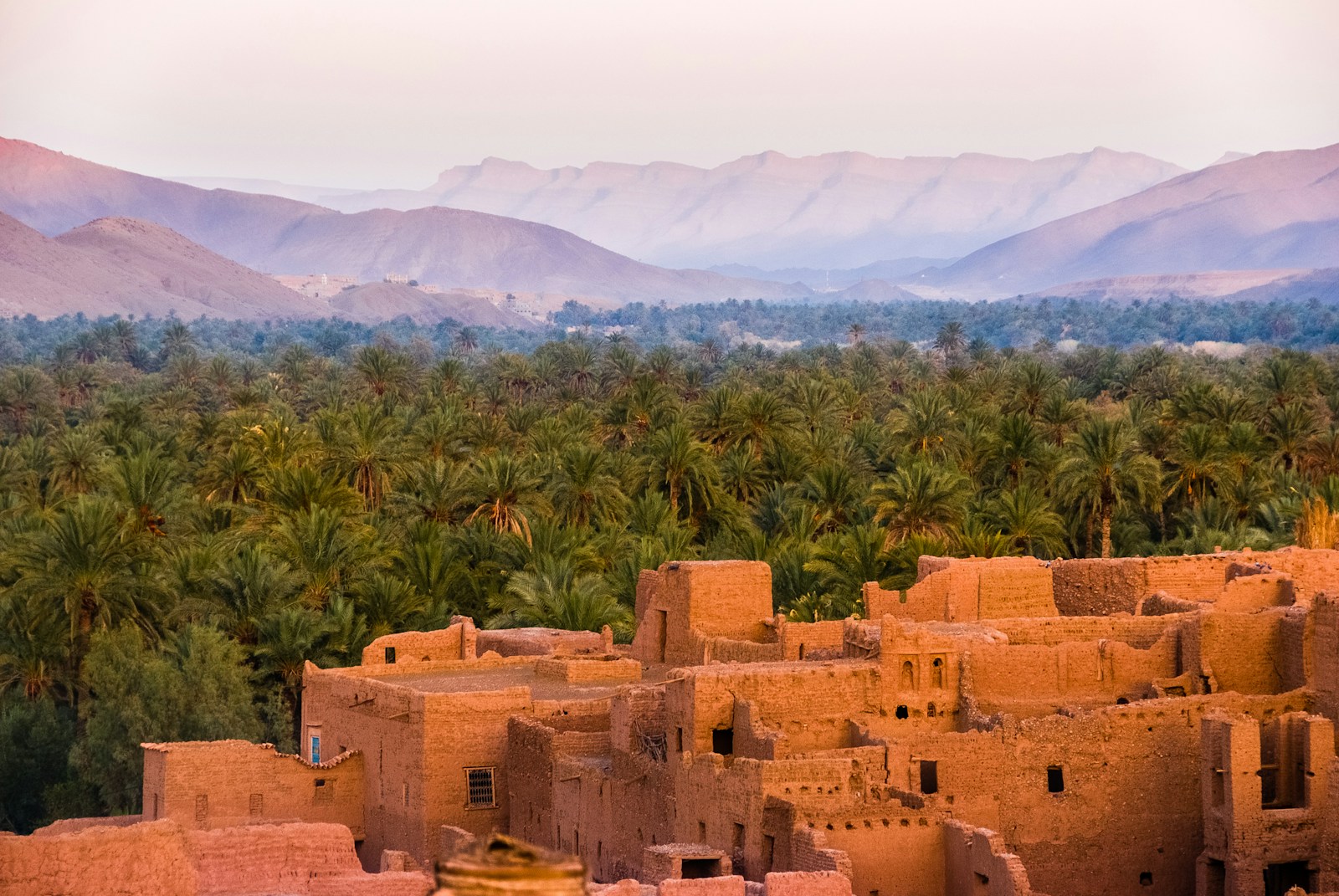
Morning. Depart Midelt after breakfast, continuing your drive south. The landscape becomes more dramatic as you pass through the stunning Ziz Valley, stopping for panoramic views of the palm groves. You'll pass through Errachidia, the administrative capital of the region.
Afternoon. Arrive in Merzouga, the gateway to the Erg Chebbi dunes. Have lunch at a local kasbah, then prepare for your camel trek into the Sahara. Leave your main luggage at the kasbah and pack an overnight bag for the desert camp.
Evening. Camel trek into the Erg Chebbi dunes at sunset (approx. 1.5 - 2 hours). Arrive at your desert camp, enjoy a traditional Berber dinner, and spend the evening stargazing around a campfire with local music. This is the highlight for many on a Morocco itinerary.
🛏 Sleep: Traditional Berber desert camp in the Erg Chebbi dunes – choose between standard and luxury options, some with private bathrooms.
🚆 Transport: Private transfer from Midelt to Merzouga (approx. 4 - 5 hours). Camel trek into the desert. This is typically arranged as part of a desert tour package.
💡 Tip: Bring wet wipes and hand sanitizer for the desert camp, as running water is limited. A headlamp is essential for navigating your tent and camp at night.
Day 5: Merzouga to Dades Valley: Desert Sunrise & Todra Gorge
Base: Boumalne Dades
Morning. Wake before dawn to climb a nearby dune and witness the breathtaking Sahara sunrise. After breakfast at the camp, camel trek back to Merzouga, where you'll rejoin your private transport.
Afternoon. Begin the journey towards the Dades Valley. Stop at the Todra Gorge, a magnificent canyon with towering rock walls. Take an hour to walk into the gorge and admire its scale. Lunch will be en route at a simple restaurant near Todra.
Evening. Arrive in the Dades Valley, often called the “Valley of a Thousand Kasbahs.” Check into your guesthouse and enjoy dinner with views of the unique rock formations and traditional kasbahs. Reflect on your desert experience.
🛏 Sleep: Guesthouse in Boumalne Dades, offering stunning views of the Dades Gorges.
🚆 Transport: Private transfer from Merzouga to Boumalne Dades (approx. 4 - 5 hours driving), including stops at Todra Gorge. This is part of the pre - booked desert tour.
💡 Tip: For the Todra Gorge, try to arrive earlier in the afternoon to avoid the biggest crowds, although it's rarely overwhelming. Wear sturdy shoes as the path can be uneven.
Day 6: Dades Valley to Ouarzazate: Kasbahs & Rose Valley
Base: Ouarzazate
Morning. After breakfast, explore more of the Dades Valley, perhaps visiting the 'monkey fingers' rock formations or a specific kasbah. Continue your drive through the Rose Valley, especially fragrant if you visit in May during the rose harvest festival in Kelaat M'Gouna.
Afternoon. Drive to Ouarzazate, known as the
Evening. Dinner in Ouarzazate, perhaps at a restaurant offering rooftop views of the city. Consider visiting a local cinema or enjoying a quiet evening at your riad. Ouarzazate is less about nightlife and more about history.
🛏 Sleep: Riad or hotel in Ouarzazate, offering a comfortable base after adventurous days.
🚆 Transport: Private transfer from Boumalne Dades to Ouarzazate (approx. 3 - 4 hours driving), including stops in the Rose Valley and Skoura. This is part of your desert tour package.
💡 Tip: In spring, buy some rose products (oils, creams, water) directly from a cooperative in Kelaat M'Gouna in the Rose Valley – prices are better and quality is high.
Day 7: Ouarzazate to Marrakech: Ait Ben Haddou & Tizi n'Tichka
Base: Marrakech
Morning. Visit Ait Ben Haddou, a UNESCO World Heritage Ksar (fortified village), famous as a filming location for many Hollywood movies. Spend 2 - 3 hours exploring its ancient mud - brick architecture and climbing to the top for panoramic views of the surrounding landscape.
Afternoon. Begin the scenic drive over the High Atlas Mountains via the Tizi n'Tichka pass (2,260 meters). This winding road offers breathtaking views, with stops for photos. Have lunch at a panoramic restaurant on the pass. Expect the drive to Marrakech to take around 4 - 5 hours from Ait Ben Haddou.
Evening. Arrive in Marrakech and check into your riad. For your first evening, immerse yourself in the chaotic energy of Djemaa el - Fna square, grabbing street food from one of the many stalls (try the harira soup or grilled meats) and watching the storytellers and musicians.
🛏 Sleep: Riad in the medina of Marrakech (e.g., in Mouassine or Riad Laârous) for proximity to the main square and souks.
🚆 Transport: Private transfer over the High Atlas Mountains (approx. 5 - 6 hours total travel including stops). This is the final leg of your desert tour.
💡 Tip: The Tizi n'Tichka pass can be prone to motion sickness. If you're susceptible, take medication beforehand and request a window seat.
Day 8: Marrakech: Medina Exploration & Bahia Palace
Base: Marrakech
Morning. Start early with a visit to the Bahia Palace (opens 9 AM) to admire its intricate Islamic and Moroccan architecture and tranquil courtyards. Afterward, dive into the bustling souks of the medina – focus on specific sections like the spice souk, slipper souk, or leather souk.
Afternoon. Lunch in the medina, perhaps at a rooftop restaurant overlooking the Koutoubia Mosque. In the afternoon, visit the Ben Youssef Madrasa (check reopening status, as it sometimes closes for renovations) or the Secret Garden for a moment of calm away from the crowds.
Evening. Dinner in the trendy Gueliz neighborhood (New City) for a more modern dining experience, or choose a traditional restaurant with a fixed menu and entertainment in the medina. Consider a cooking class to learn how to make a tagine.
🛏 Sleep: Riad in the medina of Marrakech, for continued immersion in the old city.
🚆 Transport: Walking day within the medina. Use small taxis ('petits taxis') for trips to Gueliz or the Jardin Majorelle. No intercity transport needed today. You'll be taking a flight tomorrow to Tangier.
💡 Tip: When navigating the souks, remember key landmarks like the Koutoubia Mosque or Djemaa el - Fna to help orient yourself. Don't be afraid to politely decline persistent shop vendors.
Day 9: Marrakech to Tangier: Majorelle Garden & Northern Charms
Base: Tangier
Morning. Visit the Jardin Majorelle (opens 8 AM), allowing 1 - 2 hours to explore its vibrant blue architecture and exotic plant collection. Arrive right at opening to avoid the worst crowds. Afterward, retrieve your luggage and head to Marrakech Menara Airport (RAK).
Afternoon. Fly from Marrakech (RAK) to Tangier (TNG) (approx. 1 hour flight). Upon arrival, take a Grand Taxi to your accommodation. After checking in, explore the Tangier Kasbah, with its whitewashed streets and stunning views over the Strait of Gibraltar.
Evening. Dinner in the Tangier medina, focusing on fresh seafood specific to this coastal city. Later, enjoy a mint tea at the historic Café Hafa, known for its terraced gardens and panoramic sea views.
🛏 Sleep: Hotel or riad perched within or near the Tangier Kasbah for historical charm and views.
🚆 Transport: Taxi to Marrakech Airport, short flight to Tangier, then taxi to hotel. No long drives today.
💡 Tip: Book your RAK to TNG flight at least a few weeks in advance, especially during peak season, as domestic flights can fill up quickly and prices increase. Major airlines serving this route typically include Royal Air Maroc or Air Arabia Maroc.
Day 10: Tangier: Free Morning & Departure
Base: Tangier
Morning. Enjoy a leisurely morning in Tangier. You could revisit a favorite spot, do some last - minute souvenir shopping in the Petit Socco, or simply relax at a cafe while watching local life unfold. Consider a final traditional Moroccan breakfast with msemen and fresh mint tea.
Afternoon. Depending on your flight schedule, head to Tangier Ibn Battuta Airport (TNG) via Grand Taxi. Allow ample time for traffic and check - in procedures.
Evening. Fly home from Tangier, carrying memories of Morocco's vibrant culture and desert magic.
🛏 Sleep: Tangier (departure day)
🚆 Transport: Grand Taxi to Tangier Ibn Battuta Airport (TNG).
💡 Tip: For airport transfers in Tangier, agree on the fare with the Grand Taxi driver before getting in, or ask your hotel to arrange a reputable taxi for a set price.
Travel tips
- Embrace the chaos of Djemaa el - Fna in Marrakech, but be aware that snake charmers and monkey handlers expect payment for photos; negotiate beforehand or politely decline. Do not engage with people who try to 'guide' you through the square uninvited.
- When shopping in the souks, bargaining is expected and part of the experience. Start at about 50% of the asking price and aim to settle around 60 - 70%. Be friendly but firm.
- Dress modestly throughout your trip, especially in cities and religious sites. This shows respect for local culture and can help you avoid unwanted attention. Long trousers or skirts and shirts that cover shoulders and cleavage are appropriate.
- Always carry small denominations of Moroccan Dirham (MAD) for small purchases, tips, and street vendors. Many smaller establishments don't accept cards.
- When visiting a tannery (like in Fes), accept the offered mint sprig – it helps with the strong smell. Be prepared for a small tip to the person who showed you around, even if you don't buy anything.
- If relying on taxis, always agree on a price before starting the journey, especially for Grand Taxis. For Petit Taxis, insist on the meter (compteur), though drivers may sometimes refuse for tourists.
- For the desert camp, pack light, but include warm layers even in spring/autumn, as desert nights can get surprisingly cold. A quality power bank is essential for charging devices.
- Learn a few basic Arabic or Berber phrases like 'Salam Alaikum' (hello), 'Shukran' (thank you), and 'La shukran' (no thank you) – it goes a long way with locals.
FAQs
What is the best way to get around Morocco?
For inter - city travel, a combination of trains (especially Casablanca - Fes) and pre - arranged private transfers or shared grand taxis is most efficient for this itinerary. Domestic flights are excellent for covering long distances quickly, like Marrakech to Tangier. Within cities like Fes and Marrakech, you'll be walking extensively or using small, metered 'petit taxis'.Is Morocco safe for tourists?
Yes, Morocco is generally safe for tourists, with a low crime rate. However, petty crime like pickpocketing can occur in crowded areas like the Marrakech medina. Be aware of your surroundings, especially in busy souks, and avoid walking alone in deserted areas at night. Women should be prepared for occasional catcalling but generally feel safe. Check your government's specific travel advice, e.g., US Department of State.Do I need a visa for Morocco?
Many nationalities, including citizens of the US, Canada, EU, UK, and Australia, do not require a visa for stays up to 90 days. Always check your specific visa requirements with the Moroccan embassy or consulate in your country well in advance of your trip, as policies can change. The IATA Travel Centre is a good resource for up - to - date information.What currency is used in Morocco, and should I bring cash?
The official currency is the Moroccan Dirham (MAD). While credit cards are accepted in larger hotels and restaurants, cash is essential for smaller purchases, souk vendors, local taxis, and tips. It's advisable to carry a mix of smaller and larger denominations. ATMs are widely available in cities, but exchange offices often offer better rates than airports. Get about 1000 - 2000 MAD for incidentals upon arrival.What kind of food should I try in Morocco?
You must try tagine (a slow - cooked stew), couscous (often served on Fridays), pastilla (savory - sweet pie), harira soup, and various grilled meats like kefta. Mint tea is a ubiquitous symbol of Moroccan hospitality. Don't be afraid to try street food from busy, reputable stalls in Djemaa el - Fna after carefully observing hygiene practices.Is WiFi available, and should I get a local SIM card?
WiFi is generally available and reliable in most hotels, riads, and many cafes in major cities. For constant connectivity and navigation, purchasing a local SIM card (e.g., Maroc Telecom, Orange, Inwi) upon arrival at the airport or in a city store is highly recommended. A 10GB data plan costs around 100 - 150 MAD. It's often cheaper and more reliable than relying solely on hotel WiFi, and better than international roaming charges. More on eSIMs & Mobile Data Abroad.Can I drink tap water in Morocco?
It is generally not recommended to drink tap water in Morocco, especially for tourists, due to varying water treatment standards. Stick to bottled water, which is readily available everywhere and inexpensive. Be cautious with ice in drinks and unpeeled fruits and vegetables that may have been washed with tap water. Bring a reusable filter bottle if you prefer, read more on safe drinking water abroad.


